简体中文
 English
 اللغة العربية
 Español


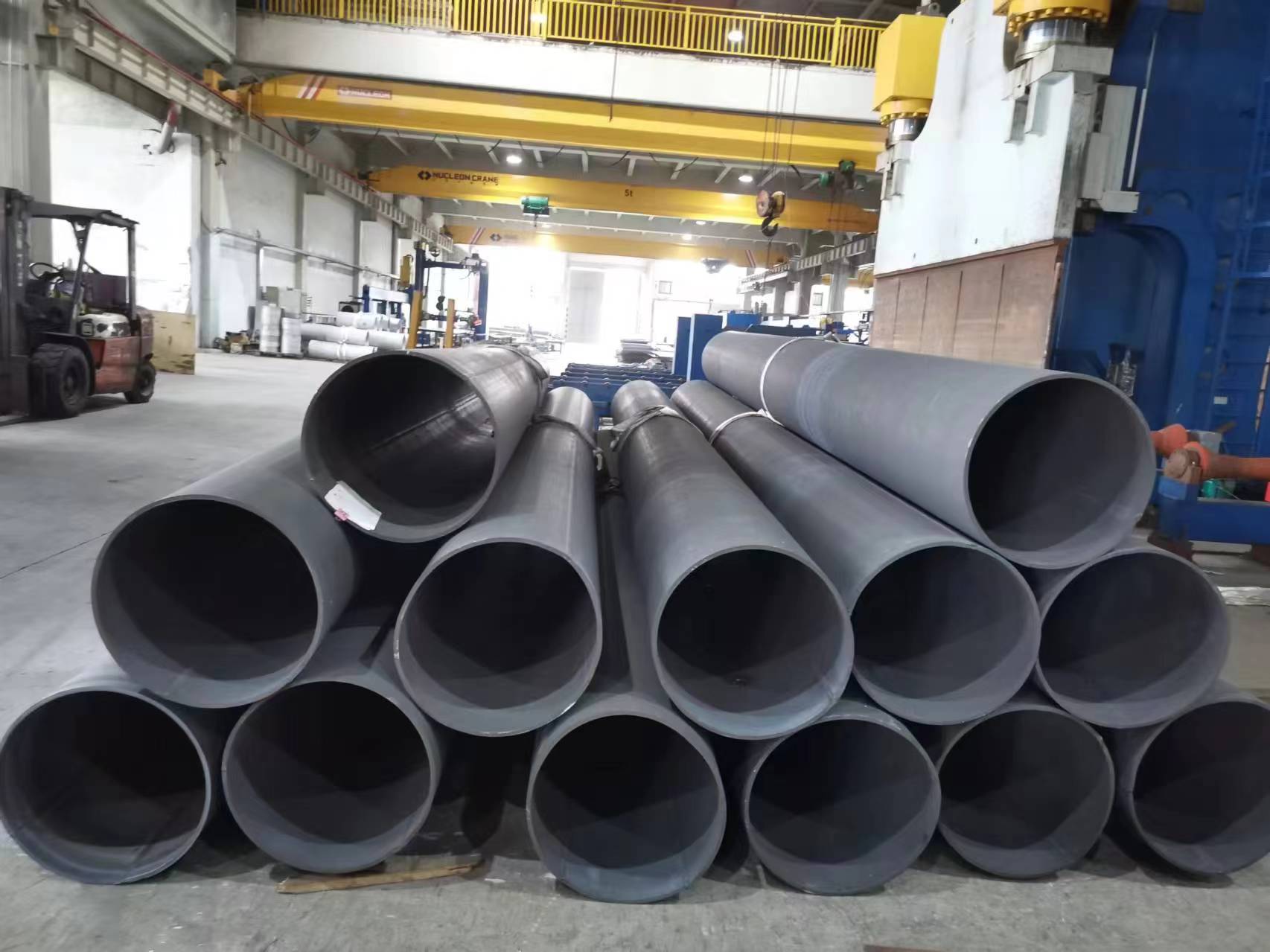
The Core Alloy Matrix: The specification governs dozens of austenitic grades, most notably TP304/304L, TP316/316L, TP321, TP347, and the high-molybdenum Super Austenitic TP317/317L. Grades stamped with an "L" (Low Carbon) strictly cap the carbon content at ≤ 0.030%. This restriction suppresses the precipitation of Chromium Carbides (Cr₂₃C₆) along the grain boundaries during welding, neutralizing the risk of Intergranular Corrosion (IGC).
Temperature and Pressure Limits: Due to their Face-Centered Cubic (FCC) crystalline lattice, ASTM A312 austenitic pipes maintain superior creep strength and oxidation resistance at high thermal parameters spanning 600°C to 800°C. Simultaneously, they exhibit immense mechanical impact toughness under deep cryogenic conditions, presenting zero risk of low-temperature brittle fracture.

Processing Mechanics: Extruded or rolled from a solid continuous-cast round billet via hot extrusion or periodic multi-roll cold reduction (Pilgering/Cold Drawing). The final pipe contains no macro- or micro-weld seams, securing absolute geometric and metallurgical homogeneity across all three spatial dimensions.
Engineering Deployment: SML profiles possess supreme hydrostatic pressure safety indexes and zero weld joint efficiency de-ratings (E=1.0). They are the mandatory engineering solution for ultra-high-pressure chemical lines, high-pressure hydrogen distribution, and high-consequence lethal fluid transport zones.
Processing Mechanics: Fabricated from precision cold-rolled strip steel coils shaped through longitudinal rollers and fused via automated TIG (Tungsten Inert Gas) or Plasma Arc Welding (PAW). The ASTM A312 code mandates: the welding cycle must be executed completely without the addition of filler metal. The seam relies entirely on autogenous autogenous fusion of the parent steel edges.
Heavily Cold Worked Pipes (HCW): A premium subset within the welded tier where the joint undergoes a minimum 35% reduction in wall thickness via cold rolling post-welding, followed by solution annealing. This dynamic mechanical reduction forces complete grain recrystallization, rendering the weld microstructure indistinguishable from the parent metal matrix.
Engineering Deployment: Modern cold-rolled coils feature tight gauge tolerances (down to ±0.02 mm), giving A312 welded pipes a wall thickness uniformity far superior to seamless alternatives, paired with a smooth internal topology. They provide immense cost-performance efficiency across low-to-medium pressure chemical systems, industrial water treatment, and standard utility loops.
Solution Heat Treatment (Annealing SOP): All finished pipes—both seamless and welded—must undergo post-forming thermal treatment. The metal is heated to a strict window of 1040°C to 1150°C, followed by rapid quenching (high-velocity water quench or forced air cooling). This thermal step relieves residual cold-forming stresses, breaks down work-hardening dislocations, and forces intergranular chromium carbides back into solid solution, anchoring grain-boundary corrosion defense.
100% Full-Length Non-Destructive Testing (NDT): The specification requires that every individual pipe length must pass a multi-physical scan combining Eddy Current Testing (ET) or Ultrasonic Testing (UT) to intercept sub-surface cracks, slag fissures, or lack-of-fusion defects.
Hydrostatic Testing: Unless contractual agreements substitute NDT entirely, each pipe must undergo individual hydrostatic pressure testing. The test pressures are computed via the ASME B36.19 wall-thickness formula—often scaling into several megapixels—and held for a designated duration to guarantee zero leakage and zero structural deflection.
Intergranular Corrosion Evaluation (IGC): When supplementary requirements are invoked (such as compliance with ASTM A262 Practice E), sensitized specimens pass through a sulfuric acid-copper sulfate immersion test, setting a strict defense line against intergranular corrosion for severe chemical plant service.
The Integrity of the EN 10204 3.1 Material Test Certificate (MTC): ASTM A312 shipments must be paired with an unassailable 3.1 MTC. The document must record the batch-specific Heat Number, ladle chemical analysis, tensile and yield strengths, maximum hardness limits (HBW ≤ 192 or HRB ≤ 90 for standard austenitics), and numeric NDT parameters.
Standardized Exterior Stenciling SOP: Every pipe length must bear a permanent, legible, continuous inkjet stencil formatted exactly as follows:
[Manufacturer Name/Logo] ASTM A312 [Grade, e.g., TP316L] [Forming Condition, e.g., SML or WLD] [Dimensions, e.g., OD 2" SCH 40S] [Heat Number]. This standardized string ensures that field installation crews can guarantee 100% material traceability and zero component mix-ups on the construction floor.
| Evaluation Dimension | ASTM A312 Seamless Pipe (SML) | ASTM A312 Welded Pipe (WLD / HCW) |
|---|---|---|
| Manufacturing Origin | Hot piercing of solid billet + cold pilger reduction | Rolling of refined cold-rolled strip + autogenous fusion |
| Dimensional Tolerance | Wall thickness displays mild eccentricity variance | Wall thickness is highly uniform with near-perfect concentricity |
| Internal Topology Roughness | Standard industrial acid-pickled finish | Exceptionally smooth inner wall derived from rolled strip base |
| Joint Efficiency Factor (E) | Designed with an absolute factor of 1.0 | Designed with an efficiency factor of 0.85 (unless 100% X-ray/NDT) |
| Capital Expenditures (CAPEX) | High initial acquisition premium with extended lead times | Optimal cost-performance ratio, rapid lead times, major advantage in large diameters |
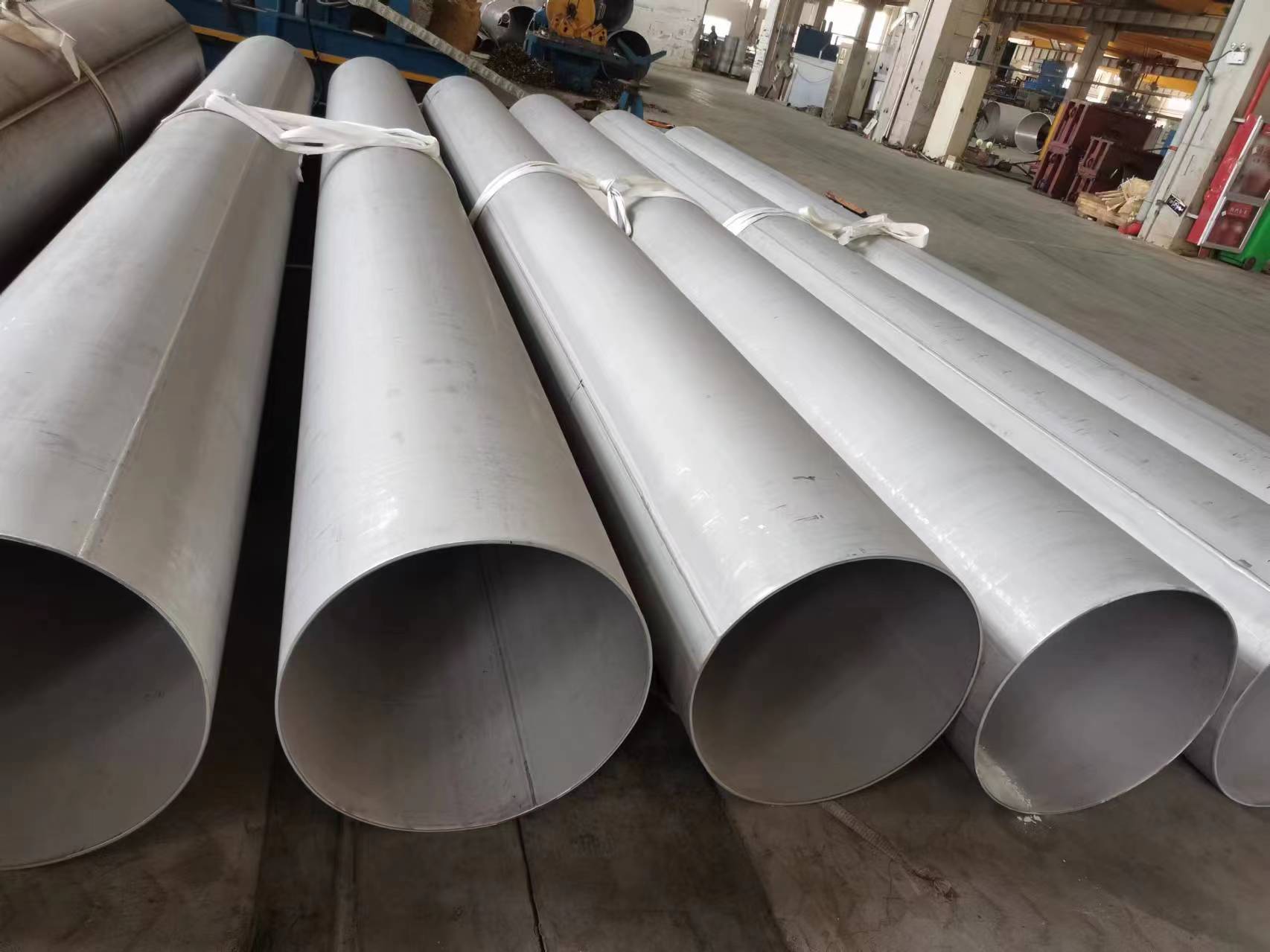 Conclusion: Strategic Material Sourcing via the TCO Model
-
[Company news] High quality supply of stainless steel pipe for ho......
2022-04-10
After years of development and innovation, the stainless steel pipe for household decoration has evolved from a single "slot body" to a "system" produ......
-

[Company news] Warmly celebrate the official launch of the fsunsc......
2005-07-19
Foshan Sunsco Technology Co.Ltd is located in Foshan City of China, focusing on stainless steel area for more than 12 years. With the support of the m......
-
[Industry dynamics] 304 stainless steel pipe market improves
2021-12-20
FSUNSCO Company operates a series of 304 stainless steel tubes all the year round. Stainless steel pipe, 304 stainless steel plate, 304 stainless stee......
-
[Industry dynamics] What can help us to quickly distinguish between 30......
2020-06-20
Many friends will worry when choosing stainless steel, this is because he can not distinguish between 304 and 201 stainless steel, how to quickly dist......