简体中文
 English
 اللغة العربية
 Español


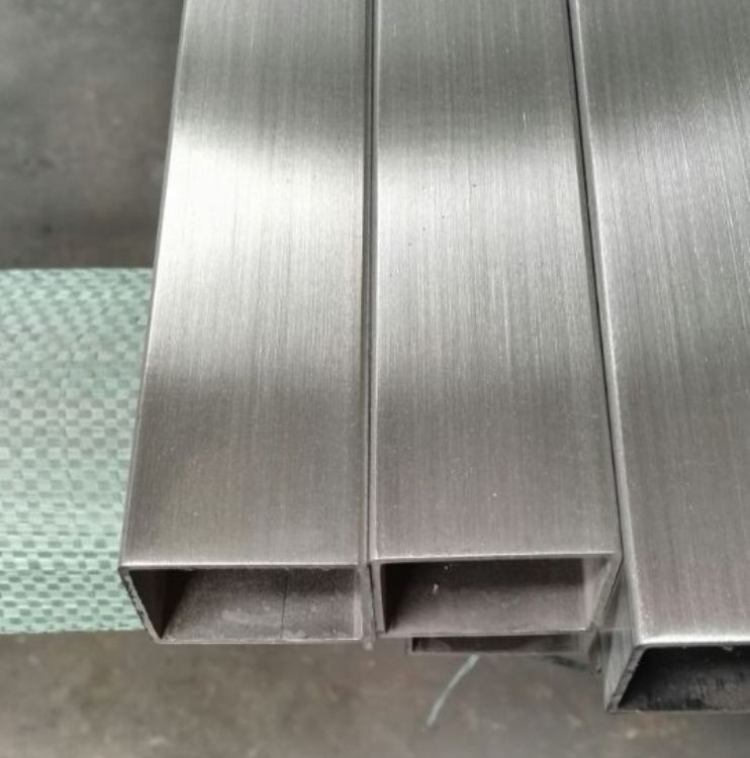 1. Pickling & Passivation (AP Finish): Reconstructing the Industrial-Grade Corrosion Barrier
The Metallurgical Mechanism of Chemical Pickling: When stainless steel pipes undergo high-temperature processing such as hot-rolling or structural welding, a thick, iron-rich, dark oxide scale forms on the surface. Technicians deploy a concentrated mixed chemical bath of Nitric Acid (HNO₃) and Hydrofluoric Acid (HF). Through simultaneous dissolution and chemical spalling, this solution strips away thermal mill scales, embedded free iron particles, and subsurface metallic impurities.
The Chromium-Enrichment Kinetics of Passivation: Once pickling cleans the metal substrate, exposure to oxidizing chemistries (such as specialized passivating fluids or atmospheric oxygen) triggers a rapid electrochemical reaction. Due to the high thermodynamic activity of Chromium (Cr) within the alloy matrix, a dense, self-healing chromium oxide passive film (Cr₂O₃) only a few nanometers thick forms within seconds, completely isolating the underlying metal from aggressive chemical environments.
Atmospheric Control in Oxygen-Free Reducing Furnaces: Standard solution annealing conducted in atmospheric air oxidizes the stainless steel surface, requiring subsequent pickling. The BA protocol circumvents this by feeding cold-rolled tubes into a continuous-muffle furnace tightly charged with pure Hydrogen gas (H₂) or a high-purity Hydrogen-Nitrogen cracked reducing atmosphere.
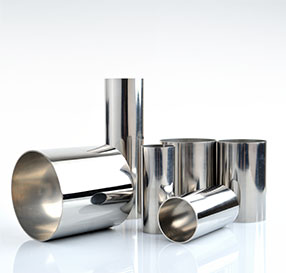
Microstructural and Optical Reconstruction: Operating within a thermal window of 1040°C to 1150°C, the process drives dynamic grain recrystallization and relieves internal cold-working stresses. Because oxygen is completely barred from the environment, no oxide scale forms. Instead, the hydrogen atmosphere reduces trace surface contaminants, preserving the ultra-smooth, highly reflective metallic mirror finish inherited from cold reduction. The interior surface roughness index (Ra) is consistently held between 0.4 μm and 0.8 μm, making BA tubes ideal for instrumentation loops and clean sanitary fluid systems.
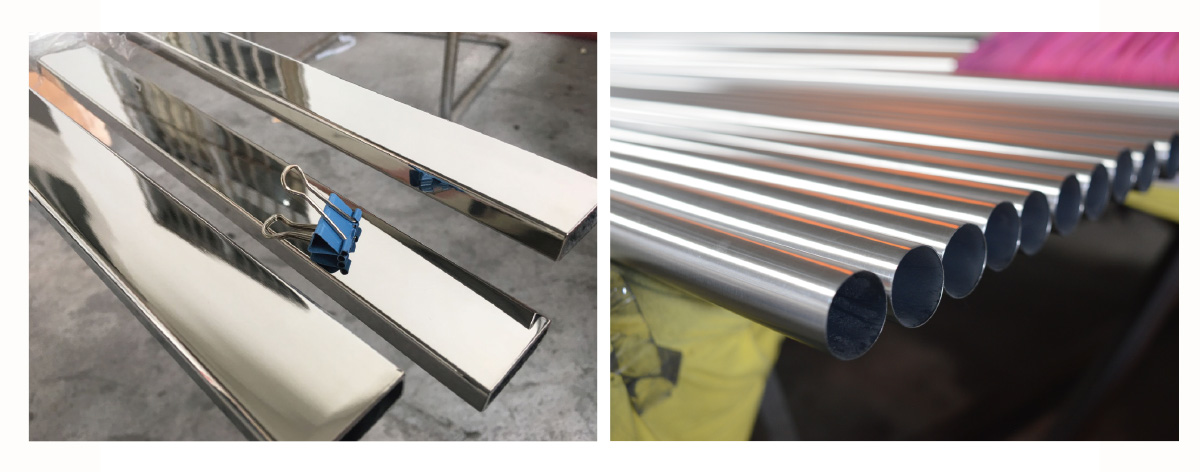
Micro-Tip Discharge and Selective Anodic Dissolution: The pre-cleaned BA tube serves as the anode immersed in a highly viscous, specialized electrolyte bath predominantly formulated with phosphoric and sulfuric acids. When high-voltage direct current (DC) is passed through the cell, it follows the physical law of micro-topological tip discharge: the local current density at the microscopic peaks of the internal wall spikes exponentially. This electrical force drives preferential anodic dissolution of the peaks, flattening the surface topology at a nanometer scale.
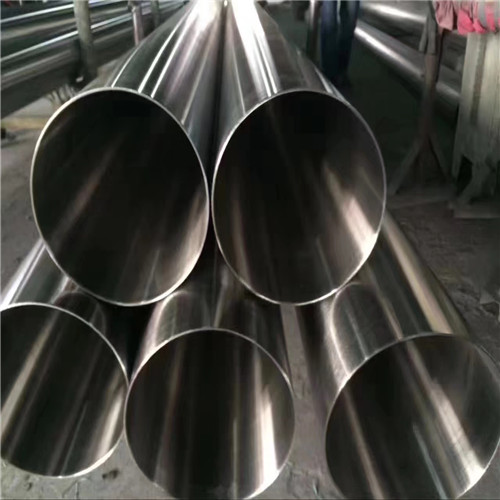
The Mechanism of Ultra-Passivation: The primary engineering secret of the EP finish lies in its element-selective stripping. The electromechanical reaction preferentially dissolves high-activity free Iron (Fe) atoms from the matrix, causing an intentional, dense enrichment of inert Chromium (Cr) atoms along the fluid interface. Post-EP, the interior roughness achieves a mirror limit of Ra ≤ 0.1 μm to 0.25 μm, with a surface Chromium-to-Iron ratio (Cr/Fe) ≥ 1.5, ensuring zero particle shedding, zero media adsorption, and maximum bio-sanitation.
Mechanical Polishing (MP): Utilizes dry or wet abrasive belts, flap wheels, and non-woven nylon wheels to physically abrade the external pipe wall through sequential mesh progressions, yielding Hairline (HL), No.4 Satin, or No.8 Mirror finishes. The core quality metric relies on managing frictional heat generation to prevent localized austenitic grain-boundary sensitization.
Physical Vapor Deposition (PVD Coating): Conducted inside high-vacuum cathodic arc or magnetron sputtering chambers, high-energy ions deposit a ceramic thin-film layer only a few micrometers thick—such as Titanium Nitride (TiN), Titanium Carbide (TiC), or Diamond-Like Carbon (DLC)—onto the external pipe surface. Beyond providing structural colors (gold, black, bronze) for technical coding or aesthetics, this layer drastically elevates external scratch resistance and hardness under harsh atmospheric salt-spray or acid-rain conditions.
| Surface Finish Class | Internal Roughness Baseline (Ra) | Primary Engineering Mechanism | Standard Application Fields |
|---|---|---|---|
| Pickling & Passivation (AP) | Uncontrolled (Typically > 1.5 μm) | Acid scaling removal + Spontaneous chemical passivation | Oil & gas extraction, heavy chemical processing, municipal sewage |
| Bright Annealing (BA) | 0.4 μm - 0.8 μm (Reflective Mirror) | Pure H₂ atmosphere reduction + Stress relief recrystallization | Precision instrumentation loops, food & dairy lines, general laboratory fluidics |
| Electropolishing (EP) | ≤ 0.1 μm - 0.25 μm (Ultra-Flat Mirror) | Anodic tip discharge dissolution + Selective Iron atom stripping | Semiconductor UHP gas lines, biopharmaceutical WFI loops, aerospace cryogenics |
| Vacuum Thin-Film (PVD) | Governed by substrate parameters | High-energy ion sputtering + Super-hard ceramic deposition | Exposed coastal network protection, custom color coding, architectural cladding |
-
[Company news] High quality supply of stainless steel pipe for ho......
2022-04-10
After years of development and innovation, the stainless steel pipe for household decoration has evolved from a single "slot body" to a "system" produ......
-

[Company news] Warmly celebrate the official launch of the fsunsc......
2005-07-19
Foshan Sunsco Technology Co.Ltd is located in Foshan City of China, focusing on stainless steel area for more than 12 years. With the support of the m......
-
[Industry dynamics] 304 stainless steel pipe market improves
2021-12-20
FSUNSCO Company operates a series of 304 stainless steel tubes all the year round. Stainless steel pipe, 304 stainless steel plate, 304 stainless stee......
-
[Industry dynamics] What can help us to quickly distinguish between 30......
2020-06-20
Many friends will worry when choosing stainless steel, this is because he can not distinguish between 304 and 201 stainless steel, how to quickly dist......