简体中文
 English
 اللغة العربية
 Español


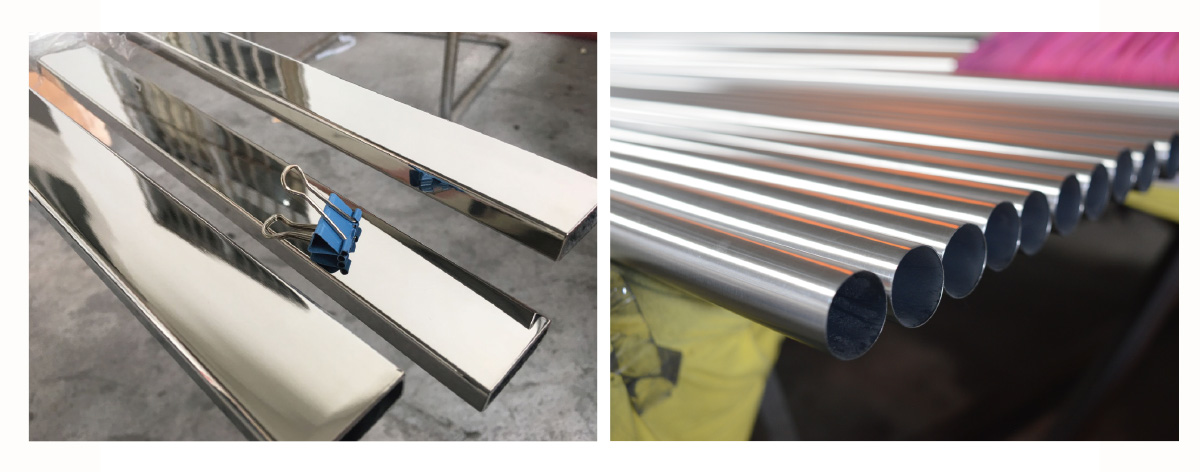
Industrial Pipe Surface Characteristics: Typically delivered with an Acid Pickled and Annealed (AP) finish or as standard commercial-grade welded piping. The interior surface roughness index (Ra typically ranges from 1.5 μm to 3.0 μm or higher). Under Scanning Electron Microscopy (SEM), the internal wall displays an array of pits, micro-tears, slag fissures, and rigid mechanical scoring marks.
Sanitary Tube Mirror and Ultra-Flat Topology: Must pass through intense mechanical polishing coupled with Bright Annealing (BA finish, yielding Ra ≤ 0.4 μm, aligning with ASME BPE SF1 standards), or high-tier Electropolishing (EP finish, forcing Ra ≤ 0.1 μm to 0.25 μm, aligning with SF4 to SF6 parameters).
The Engineering Logic: The micro-cavities and scoring marks inherent in industrial pipes act as structural safe harbors where bacteria and particulate matter collect, aggregate, and develop into a resilient Biofilm. This configuration prevents total drainage and cross-contamination during product swapouts. The mirror-smooth interior of a sanitary tube eliminates fluid dead zones, securing zero media adsorption and absolute cleanability during Clean-in-Place (CIP) and Sterilize-in-Place (SIP) routines.
Industrial Pipe Passivation Baselines: Following thermomechanical hot-rolling or cold-drawing, industrial pipes undergo standard chemical immersion pickling. While this creates a passive film, the resulting layer is structurally loose and retains a high percentage of free Iron (Fe) atoms, which can cause iron-ion leaching when exposed to high-purity deionized water or aggressive chemical velocities.
Sanitary Tube "Ultra-Passivation" Processing: Premium sanitary tubes, especially those undergoing Electropolishing (EP), utilize electrochemical surface physics. The process coordinates specific electrical potential differentials to preferentially dissolve high-activity free Iron (Fe) atoms from the surface matrix, driving an intentional enrichment of highly inert Chromium (Cr) atoms along the fluid interface.
The Diagnostic Metric: Evaluated via Auger Electron Spectroscopy (AES), a certified sanitary tube must exhibit a surface Chromium-to-Iron ratio (Cr/Fe) ≥ 1.5, with a dense, chromium-rich passive layer thickness ≥ 2.5 nm (25 Å). This ultra-passivated nanostructure forms a perfect chemical shield, cutting off ionic leaching pathways.
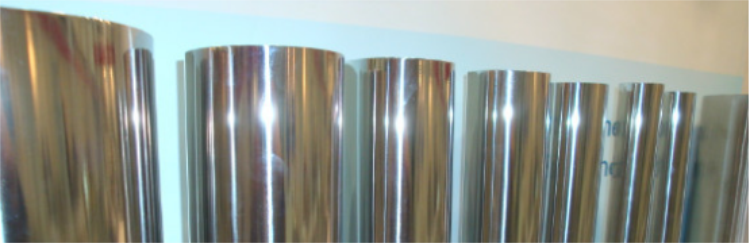
Industrial Pipe Chemical Flexibility: Raw material heats only need to align with broad standard chemistry tolerances (such as ASTM A312 or equivalent national codes). For instance, the Sulfur (S) threshold is simply capped at a maximum limit of ≤ 0.030%, leading to significant batch-to-batch element fluctuation.
Sanitary Tube Controlled Sulfur Window: Global high-purity specifications, such as the ASME BPE standard, compress the allowable Sulfur content into a rigid, golden window between 0.005% and 0.017% for orbital-welded tubes.
The Engineering Logic: If Sulfur values drop below 0.005%, the fluid dynamics and surface tension temperature coefficients of the molten weld pool alter erratically, causing a shallow arc profile that prevents complete weld penetration. If Sulfur exceeds 0.017%, it promotes low-melting-point eutectic segregations within the Heat-Affected Zone (HAZ), inducing micro-hot cracking and degrading local passivation. While industrial pipes frequently suffer from offset welds or lack of fusion during field automated welding, sanitary tubes guarantee high-frequency, defect-free root pass consistency.
Post-Processing and Cleanliness Logistics: Industrial pipes are packaged in bare bundles post-pickling and loaded directly onto transport flats. Premium sanitary tubes (especially EP grades) pass through multi-stage ultrasonic cleaning using 18 MΩ·cm Deionized (DI) Water to purge all hydrocarbons. They enter an ISO Class 5 (Class 100) or ISO Class 6 (Class 1,000) cleanroom for thermal drying and are vacuum-sealed inside double-layered heavy PE bags pre-purged with high-purity Nitrogen gas (N₂), preventing atmospheric contamination during transit.
The Authority of Full Heat Traceability: Sourced sanitary tubes are paired with an unassailable Mill Test Certificate (MTC) compliant with EN 10204 3.1. The Heat Number permanently stenciled on the tube body must securely map back to the original chemical ladle analysis, internal borescope visual recordings, non-destructive testing (ET/UT) logs, and numeric surface roughness profiles.
| Metric / Dimension | Industrial Stainless Steel Pipe | Sanitary Stainless Steel Tube |
|---|---|---|
| Primary Standards | ASTM A312 / EN 10216-5 | ASME BPE / ASTM A270 / SEMI |
| Internal Roughness (Ra) | 1.5 μm – 3.0 μm (Porous micro-topology) | ≤ 0.4 μm (BA Finish) / ≤ 0.2 μm (EP Finish) |
| Passivation Quality | Standard Pickling Film (Low Cr/Fe ratio) | Ultra-Passivated Oxide Layer (Cr/Fe ratio ≥ 1.5) |
| Sulfur (S) Control | Broad Envelope (S ≤ 0.030% baseline) | Strictly locked between 0.005% and 0.017% |
| Cleanliness at Delivery | Standard Bundling (Trace oils/dust allowed) | DI Water Cleansed + ISO Cleanroom Vacuum Pack |
-
[Company news] High quality supply of stainless steel pipe for ho......
2022-04-10
After years of development and innovation, the stainless steel pipe for household decoration has evolved from a single "slot body" to a "system" produ......
-

[Company news] Warmly celebrate the official launch of the fsunsc......
2005-07-19
Foshan Sunsco Technology Co.Ltd is located in Foshan City of China, focusing on stainless steel area for more than 12 years. With the support of the m......
-
[Industry dynamics] 304 stainless steel pipe market improves
2021-12-20
FSUNSCO Company operates a series of 304 stainless steel tubes all the year round. Stainless steel pipe, 304 stainless steel plate, 304 stainless stee......
-
[Industry dynamics] What can help us to quickly distinguish between 30......
2020-06-20
Many friends will worry when choosing stainless steel, this is because he can not distinguish between 304 and 201 stainless steel, how to quickly dist......