简体中文
 English
 اللغة العربية
 Español


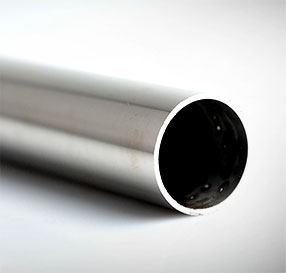
Strict Ra Thresholds: For tubes processed via mechanical polishing and Bright Annealing (BA), the internal surface roughness index (Ra) must consistently maintain ≤ 0.4 μm (ASME BPE SF1 baseline). For adva
nced Electropolished (EP) lines handling UHP fluids, the internal Ra limit drops to ≤ 0.1 μm to 0.25 μm (ASME BPE SF4 to SF6 tiers).
Zero Crystal-Boundary Tearing and Micro-Burrs: Under Scanning Electron Microscopy (SEM) evaluation, the internal wall topology must display a continuous, mirror-like topography. The substrate must be free from micro-scratches, overlap slivers, pits, micro-fissures, or embedded mechanical abrasive grit. Eliminating these physical micro-crevices deprives bacteria of structural anchors to form resilient Biofilms, ensuring supreme bio-sanitation and total ease of Clean-in-Place (CIP) and Sterilize-in-Place (SIP) cycles.
Selective Anodic Dissolution Mechanics: Advanced Electropolishing (EP) is far more than a physical smoothing technique. The process mechanism coordinates electrical potential differentials to preferentially dissolve high-activity free Iron (Fe) atoms from the surface matrix, forcing an intentional accumulation of highly inert Chromium (Cr) atoms along the immediate fluid-contact boundary.
The Ultimate Passivation Metric: Verified through Auger Electron Spectroscopy (AES) or X-ray Photoelectron Spectroscopy (XPS), a true high-purity tube must display a surface Chromium-to-Iron ratio (Cr/Fe) ≥ 1.5, with a dense, chromium-rich passive layer thickness ≥ 2.5 nm (25 Å). This ultra-passivated nanostructure completely blocks internal iron ions from migrating into the process media, guaranteeing absolute fluid purity.
The Controlled Sulfur (S) Window: Per ASME BPE specifications optimized for automated orbital TIG welding, the Sulfur content must be tightly governed between 0.005% and 0.017%. If Sulfur drops below 0.005%, the fluid dynamics of the molten weld pool shift Errant, resulting in poor weld penetration and incomplete joint fusion. Conversely, if Sulfur exceeds 0.017%, it induces excessive manganese sulfide inclusions that crack under thermal stress and cause severe alloy segregation.
Vacuum Dual-Melted (VIM+VAR) Substrates: For electronic-grade UHP pipelines, the baseline alloy (typically custom 316L) undergoes Vacuum Induction Melting (VIM) followed by Vacuum Arc Remelting (VAR). This advanced double-vacuum refining method strips away trace dissolved gases (Oxygen, Hydrogen, Nitrogen) and purges non-metallic inclusions, delivering an exceptionally homogenous crystal lattice.
Zero-Height Internal Bead Working: For welded sanitary tubes, the internal weld seam must pass through offline or online roll-planishing or mechanical bead working. This process details compress the weld bead reinforcement profile down to match the parent metal matrix, achieving a step-free transition that eliminates flow turbulence and fluid entrapment zones.
Pure Hydrogen Atmosphere Solution Annealing: Following structural cold reduction, tubes must be fed into a continuous atmosphere furnace charged with ultra-pure Hydrogen gas (H₂ purity ≥ 99.999%) at temperatures between 1040°C and 1150°C. The complete absence of oxygen yields a bright finish devoid of oxide scales. Instantaneous, high-velocity quenching directly follows, forcing the metal past the sensitization zone (450°C to 850°C) within seconds. This eliminates residual deformation stress, suppresses Chromium Carbide (Cr₂₃C₆) precipitation, and locks in a uniform, single-phase austenitic grain pattern.
DI Water Washing and ISO Class 5 Packaging: Premium EP tubes must undergo multi-stage ultrasonic cleansing utilizing 18 MΩ·cm
Deionized (DI) Water. The assets enter an ISO Class 5 (Class 100) or ISO Class 6 (Class 1,000) ultra-cleanroom for thermal drying. Ends are capped and vacuum-sealed inside double-layered heavy-duty PE bags pre-purged with high-purity Nitrogen gas, arresting atmospheric contaminati
on during intercontinental transport.
100% Full-Parameter Traceability (MTC): Shipments must be paired with an unassailable Mill Test Certificate (MTC) compliant with EN 10204 3.1. The Heat Number permanently stenciled on the tube body must securely map back to the original chemical ladle analysis, non-destructive testing (ET/UT) logs, borescope inspection records, and numeric surface roughness profiles.
-
[Company news] High quality supply of stainless steel pipe for ho......
2022-04-10
After years of development and innovation, the stainless steel pipe for household decoration has evolved from a single "slot body" to a "system" produ......
-

[Company news] Warmly celebrate the official launch of the fsunsc......
2005-07-19
Foshan Sunsco Technology Co.Ltd is located in Foshan City of China, focusing on stainless steel area for more than 12 years. With the support of the m......
-
[Industry dynamics] 304 stainless steel pipe market improves
2021-12-20
FSUNSCO Company operates a series of 304 stainless steel tubes all the year round. Stainless steel pipe, 304 stainless steel plate, 304 stainless stee......
-
[Industry dynamics] What can help us to quickly distinguish between 30......
2020-06-20
Many friends will worry when choosing stainless steel, this is because he can not distinguish between 304 and 201 stainless steel, how to quickly dist......