简体中文
 English
 اللغة العربية
 Español


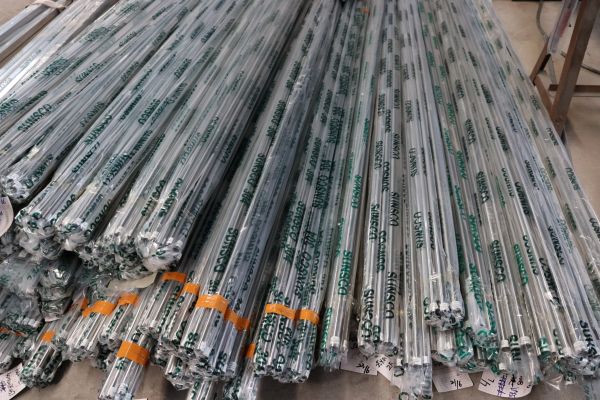
Erecting Dedicated Storage Racks: Upon arrival, stainless steel pipes must never be laid directly on bare ground, gravel, or concrete slab surfaces. Contractors must construct dedicated structural staging racks. Crucially, all horizontal crossbeams must be lined with soft structural timber, rubber dampening strips, polyethylene (PE) snap-on pipe saddles, or heavy felt cushions to eliminate metal-on-metal contact with the carbon steel rack frame.
Atmospheric and Environmental Barriers: Staging yards must be situated on high, well-drained ground to avoid flash pooling. The stockpiles must be sheeted with high-strength, breathable, weather-proof tarpaulins. Avoid cheap, non-breathable plastic sheets, which trap humidity beneath the wrap, generating a destructive greenhouse micro-climate that induces pitting under heat and humidity.
The "No Need, No Removal" Cap Directive: Factory-fitted heavy-duty plastic end caps represent the primary defensive barrier for the pipe core. No personnel may strip end caps prematurely until the exact moment of automated orbital welding alignment. Even a 24-hour exposure allows wind tunnel dynamics to draw in vast quantities of ambient silica sand, concrete dust, or construction debris.
Immediate Resealing Post-Cutting: If a linear pipe section is cut mechanically on-site, any remaining off-cut stock destined back to the storage yard must be resealed immediately. Workers must utilize high-viscosity, sulfur-free and chlorine-free specialized sealing tapes or backup plastic end caps, maintaining zero exposure to ambient air.
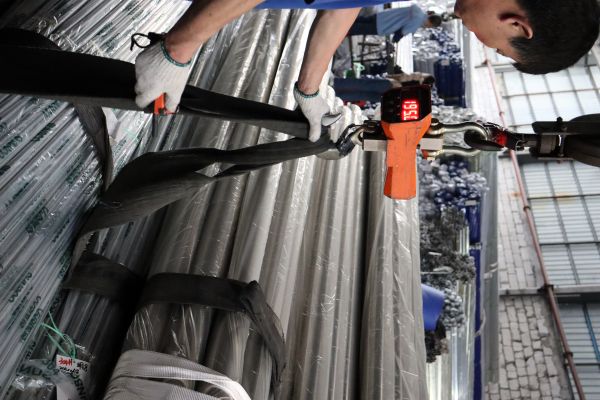
Absolute Prohibition of Bare Wire Ropes: During flatbed offloading or internal site positioning, under no circumstances should bare steel wire ropes or raw carbon steel chains wrap around stainless steel pipe bodies. Riggers must exclusively deploy wide-body, high-strength polyester webbing slings (Nylon Slings).
Flexible Modification of Forklift Tines: If forklifts handle the skids or bundles, the bare metallic faces of the forklift tines must be retrofitted with custom-fit heavy rubber sleeves or durable timber structural shoes. This eliminates high-impact metal-on-metal scraping during transport over uneven terrain.
Deployment of Anti-Spatter Welding Blankets: When carbon steel electric arc welding, gouging, or grinding occurs adjacent to stainless steel stockpiles, the stainless pipe bodies must be fully cloaked behind heavy-duty fiberglass welding blankets. Hot carbon steel sparks flying onto bare stainless steel melt instantly into the matrix, causing permanent iron-contamination spots that breach the passive boundary.
Strict Chemical Limits on Layout Markers and NDT Media: Welders executing layout marking, cut-sheet labeling, or non-destructive testing (NDT) must never use commercial markers or chalks containing chlorides (Cl⁻) or sulfur compounds. Halogens are the primary drivers of Stress Corrosion Cracking (SCC) in austenitic grades. Field teams must exclusively use certified "low-chlorine, sulfur-free" industrial-grade markers.
-
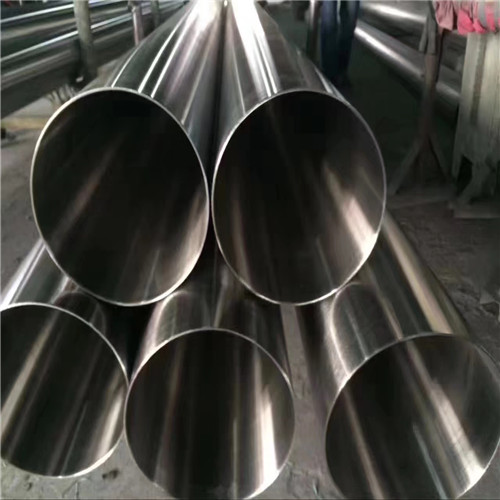
[Company news] High quality supply of stainless steel pipe for ho......
2022-04-10
After years of development and innovation, the stainless steel pipe for household decoration has evolved from a single "slot body" to a "system" produ......
-

[Company news] Warmly celebrate the official launch of the fsunsc......
2005-07-19
Foshan Sunsco Technology Co.Ltd is located in Foshan City of China, focusing on stainless steel area for more than 12 years. With the support of the m......
-
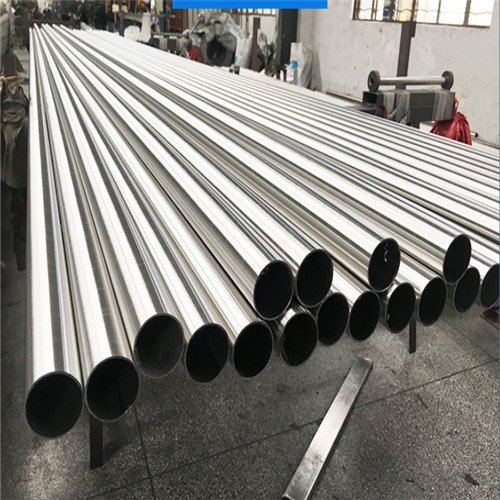
[Industry dynamics] 304 stainless steel pipe market improves
2021-12-20
FSUNSCO Company operates a series of 304 stainless steel tubes all the year round. Stainless steel pipe, 304 stainless steel plate, 304 stainless stee......
-
[Industry dynamics] What can help us to quickly distinguish between 30......
2020-06-20
Many friends will worry when choosing stainless steel, this is because he can not distinguish between 304 and 201 stainless steel, how to quickly dist......