简体中文
 English
 اللغة العربية
 Español


Flatness and Dimensional Tolerance Verification: In strict accordance with technical specification agreements (such as ASTM A480 or EN 10028-7), technicians deploy calibrated instruments to inspect gauge uniformity (crown profile), length/width tolerances, and flatness (wave parameters).
Surface Integrity and Protective Coating Audit: For cold-rolled BA or 8K mirror-polished sheets, teams inspect the surface protective film (e.g., PE film or specialized fiber-laser film). It must be tightly bonded, free of air bubbles, and free of tears, preventing foreign grit from puncturing the film and scoring the substrate during physical handling.
Digital Documentation and Heat Traceability: Quality inspectors verify the Heat Number, material grade (e.g., 304, 316L, S32205), dimensional specs, and production barcodes on the sheet edges or bundle tags. It is mandatory that the physical tags match the accompanying Mill Test Certificate (MTC) compliant with EN 10204 3.1 or 3.2 with 100% precision to guarantee end-to-end traceability.
Wooden Skids: Highly robust, heavy-duty hardwood skids must be utilized. The skid length and width must slightly exceed the steel sheets to prevent any edge overhang. For export cargo, all wooden components must undergo thermal or chemical treatment and bear the ISPM 15 (IPPC) stamp, or use fumigation-free plywood alternatives.
Steel Skids: For heavy-gauge, hot-rolled industrial plates, custom steel-framed skids are deployed. The contact faces between the steel skid and the stainless steel plates must be fully lined with heavy corrugated fiberboard or dense rubber pads.
Layer 1 (Base Underlayment): High-density corrugated fiberboard is laid across the skid surface to block moisture migration and isolate the steel from natural organic acids present in the wood.
Layer 2 (Anti-Scratch Interleaving): For unfilmed sheets, sheets must be separated using specialized neutral, moisture-proof interleaving paper to prevent cold-welding or surface discoloration caused by harmonic transport vibrations.
Layer 3 (Vacuum-Grade Vapor Barrier): The entire bundle is wrapped in a heavy plastic stretch film integrated with an appropriate volume of industrial-grade desiccants.
Layer 4 (Mechanical Shell): A robust external shell composed of galvanized iron sheeting or high-strength structural cardboard covers the bundle to protect corners and edges from strapping damage.
Layer 5 (High-Tension Securing): At least four longitudinal and two transverse heavy-duty galvanized steel strapping bands bind the bundle. High-strength plastic or metal corner protectors are placed under the straps to distribute clamping forces and protect the plate edges.
Container/Vehicle Cleaning & Inspection ➔ Iron Contamination Physical Isolation ➔ Mechanized Forklift/Crane Ingress ➔ Weight Distribution Management ➔ Rigid Bracing, Blocking & Seal Recording
The Absolute "Zero Carbon Steel Contact" Rule: This represents the primary chemical defense mechanism in stainless steel logistics. When stuffed into shipping containers or loaded onto open flatbeds, the stainless steel packaging must never come into direct contact with the bare ferrous beds of trucks or the structural ribs of container walls. Heavy timber dunnage, rubber mats, or continuous plastic foam sheets must be deployed at all boundary layers to block iron-ion migration, preventing localized electrochemical pitting in humid marine air.
Strategic Stacking and Stress Distribution: Heavy, hot-rolled plates form the lower foundation layers, while thin cold-rolled sheets sit on top. When stacking multiple skids, the support timbers of the upper and lower pallets must align perfectly vertically. This channels gravitational forces straight down and prevents out-of-alignment stress from flexing or warping the lower sheets.
Mechanical Bracing and Blocking: For ocean container transport, the pallet bases must be secured using a structural timber grid (Bracing & Blocking) nailed pneumatically into the container flooring to eliminate shifting. For ultra-heavy plates, heavy-duty polyester lashing straps and ratchets anchor the payload to container tie-down loops, ensuring that cargo displacement under rough sea conditions or sudden braking is limited to millimeter tolerances.
-
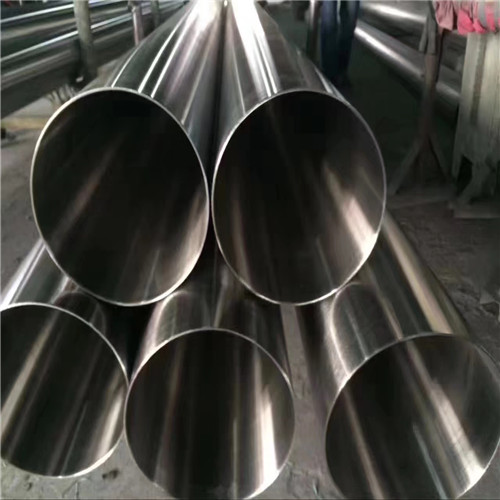
[Company news] High quality supply of stainless steel pipe for ho......
2022-04-10
After years of development and innovation, the stainless steel pipe for household decoration has evolved from a single "slot body" to a "system" produ......
-

[Company news] Warmly celebrate the official launch of the fsunsc......
2005-07-19
Foshan Sunsco Technology Co.Ltd is located in Foshan City of China, focusing on stainless steel area for more than 12 years. With the support of the m......
-
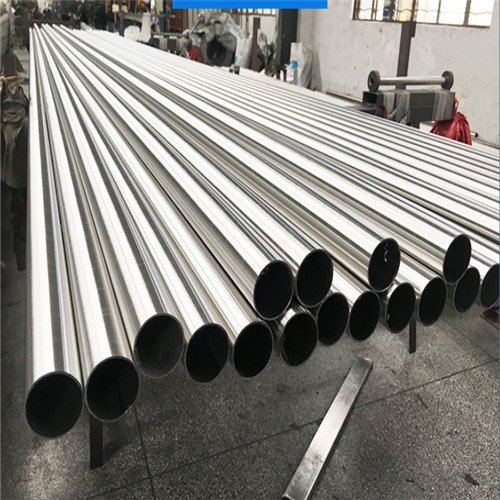
[Industry dynamics] 304 stainless steel pipe market improves
2021-12-20
FSUNSCO Company operates a series of 304 stainless steel tubes all the year round. Stainless steel pipe, 304 stainless steel plate, 304 stainless stee......
-
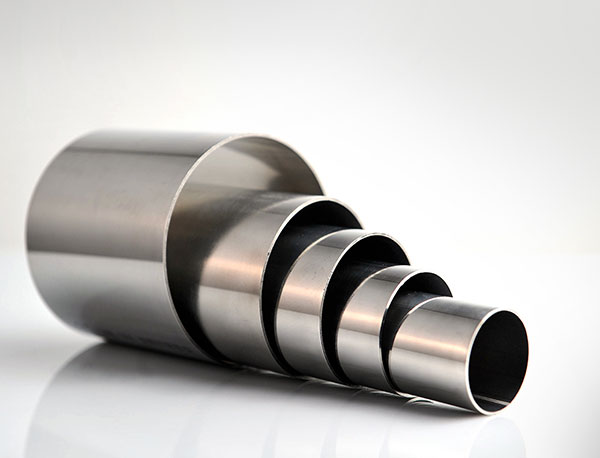
[Industry dynamics] What can help us to quickly distinguish between 30......
2020-06-20
Many friends will worry when choosing stainless steel, this is because he can not distinguish between 304 and 201 stainless steel, how to quickly dist......